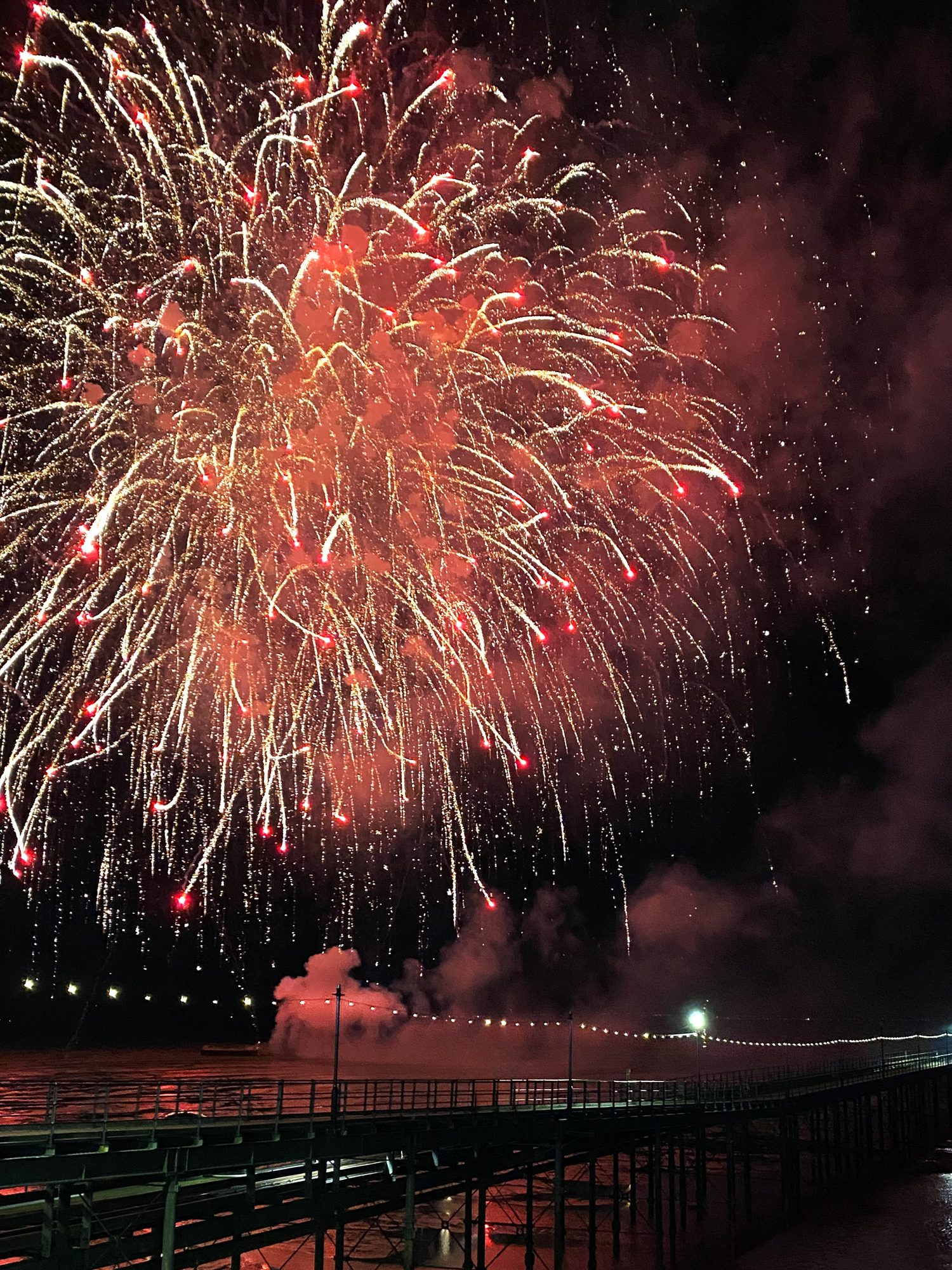
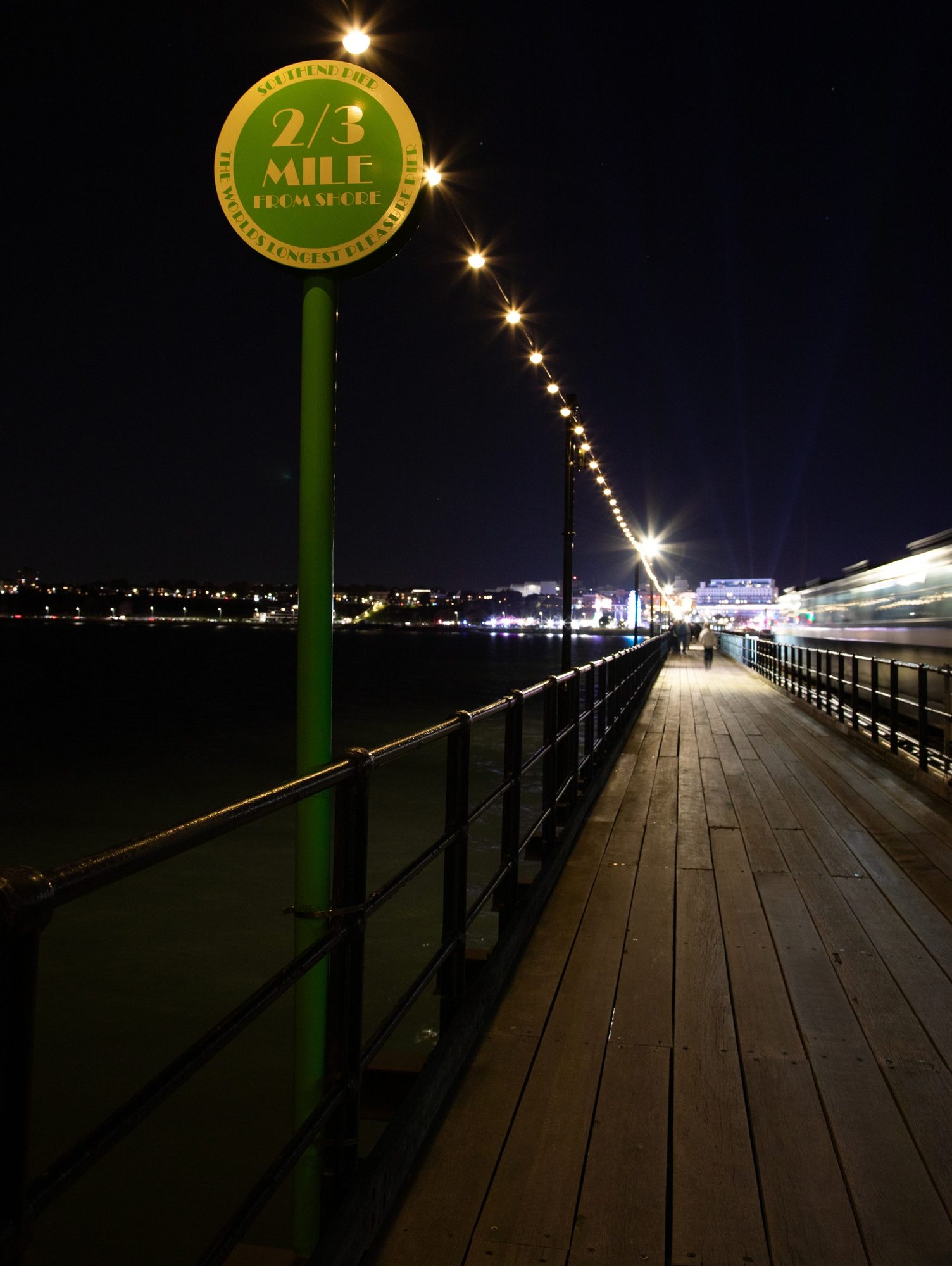
Warm white, dark sky responsible, on the longest pleasure pier in the world.
“The Pier is Southend, Southend is the Pier.” Sir John Betjeman's line is how the town understands itself. Southend Pier is the longest pleasure pier in the world: 2,158 metres reaching from the Essex shore into the Thames Estuary. A wooden pier opened here in 1830; by 1848 it was the longest in Europe, and the iron pier that stands today, designed by the Victorian engineer James Brunlees, opened in 1889. A year later it carried the first pier railway in the country.
The pier has survived everything two centuries could send at it. In the Second World War it served as HMS Leigh, the naval control centre for the Thames Estuary, organising 3,367 convoys. It has come through five major fires, and each time the town rebuilt it. Today it is a Grade II listed building, twice named Pier of the Year.
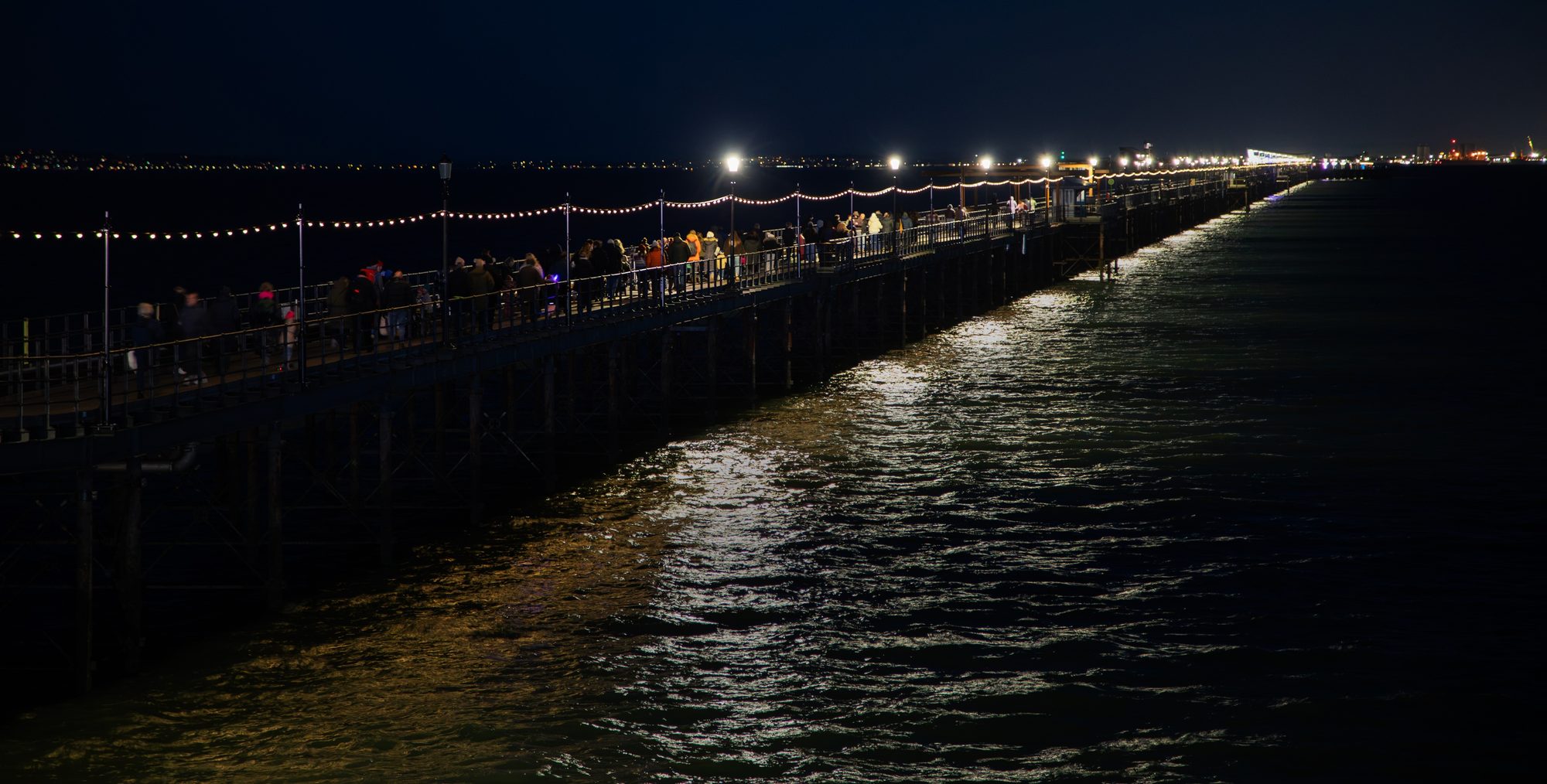
A structure like this does not need decoration. It needs light that respects it: warm, continuous, marine grade, and dark sky responsible above an estuary rich in wildlife. That is the brief MaxiLED answered, with 1.76 kilometres of warm white light running the length of the world's longest pleasure pier.
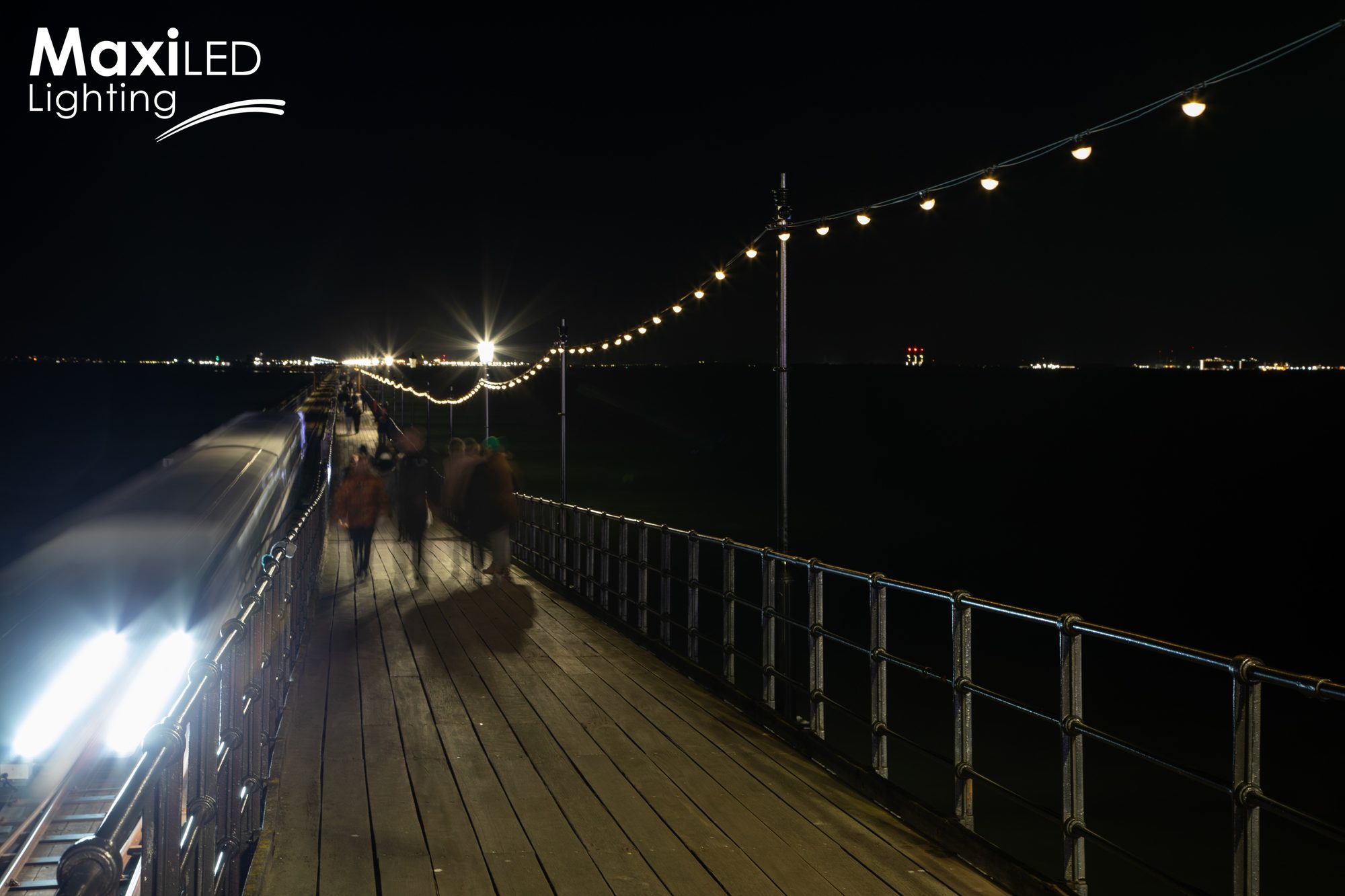
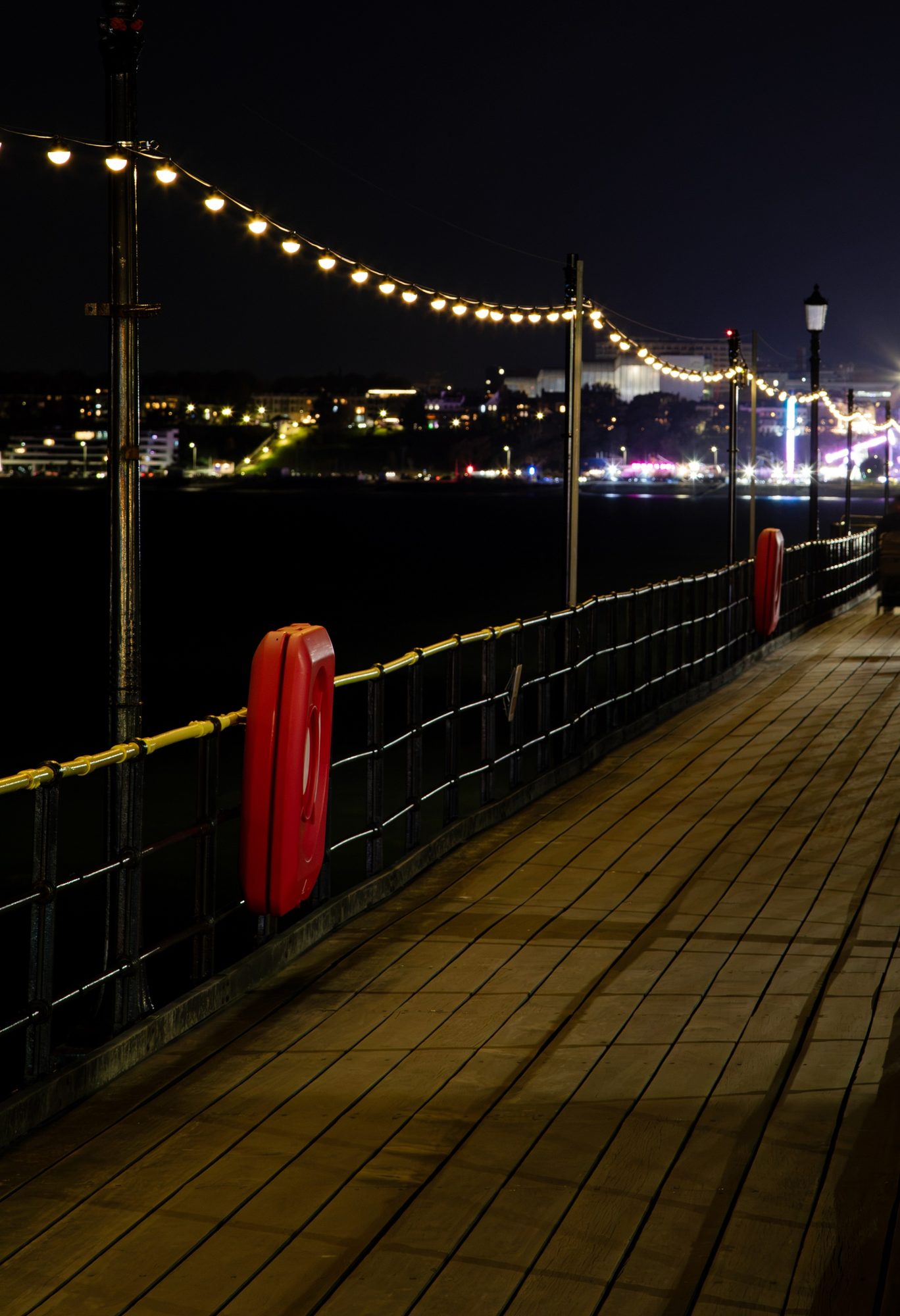
Of the pier's 2,158 metres, 1.76 kilometres run under MaxiLED light: 1,763 Large Globes at 2700 K, one every metre, in runs of 100 globes on 20 m fly leads. Each globe draws 0.6 W, so a scheme covering more than a mile of Grade II listed ironwork runs on roughly one kilowatt, managed remotely.
Every globe wears a black MaxiBATCAP with frosted cover: upward spill is removed entirely, and the source softens into the warm, even glow the pier's Victorian character asks for. 0.6 W per metre of illuminated pier, 365 nights a year.
The world's longest pleasure pier sits in the middle of the Thames Estuary, a landscape defined by tide, birdlife and open sky. Lighting it is not a question of power, it is a question of discipline. The scheme holds a single warm tone from shore to pierhead and puts the light where it belongs: on the deck, on the ironwork, on the people walking the mile out to sea.
The MaxiBATCAP makes that discipline physical. DarkSky approved shielding on every one of the 1,763 globes removes upward spill, so the installation adds presence to the pier without adding glow to the sky. MaxiLED's festoon is the only festoon range globally to hold DarkSky accreditation, and Southend is the proof at scale: the accreditation applied not to a garden or a courtyard, but to more than a mile of coastal landmark.
“Southend Pier is the definition of an unforgiving specification: a Grade II listed structure, a mile and a third of estuary exposure, and a council that rightly expects the sky above it to stay dark. The MaxiLED globe with the DarkSky Batcap was the only festoon we could put forward that answered all three, and at 0.6 watts per metre it answers the energy question too.”
A pier that has survived storms, five fires and a world war does not accept fragile fittings. Salt air, wind-driven rain and tidal exposure sit on every metre of the structure. The MaxiLED Large Globe is built for exactly this: IP67 sealed, impact rated, UV stable, marine grade by design, and field proven on British piers — seven years under Saltburn Pier in the North Sea's spray and still performing. Southend bought into a track record, not a promise.

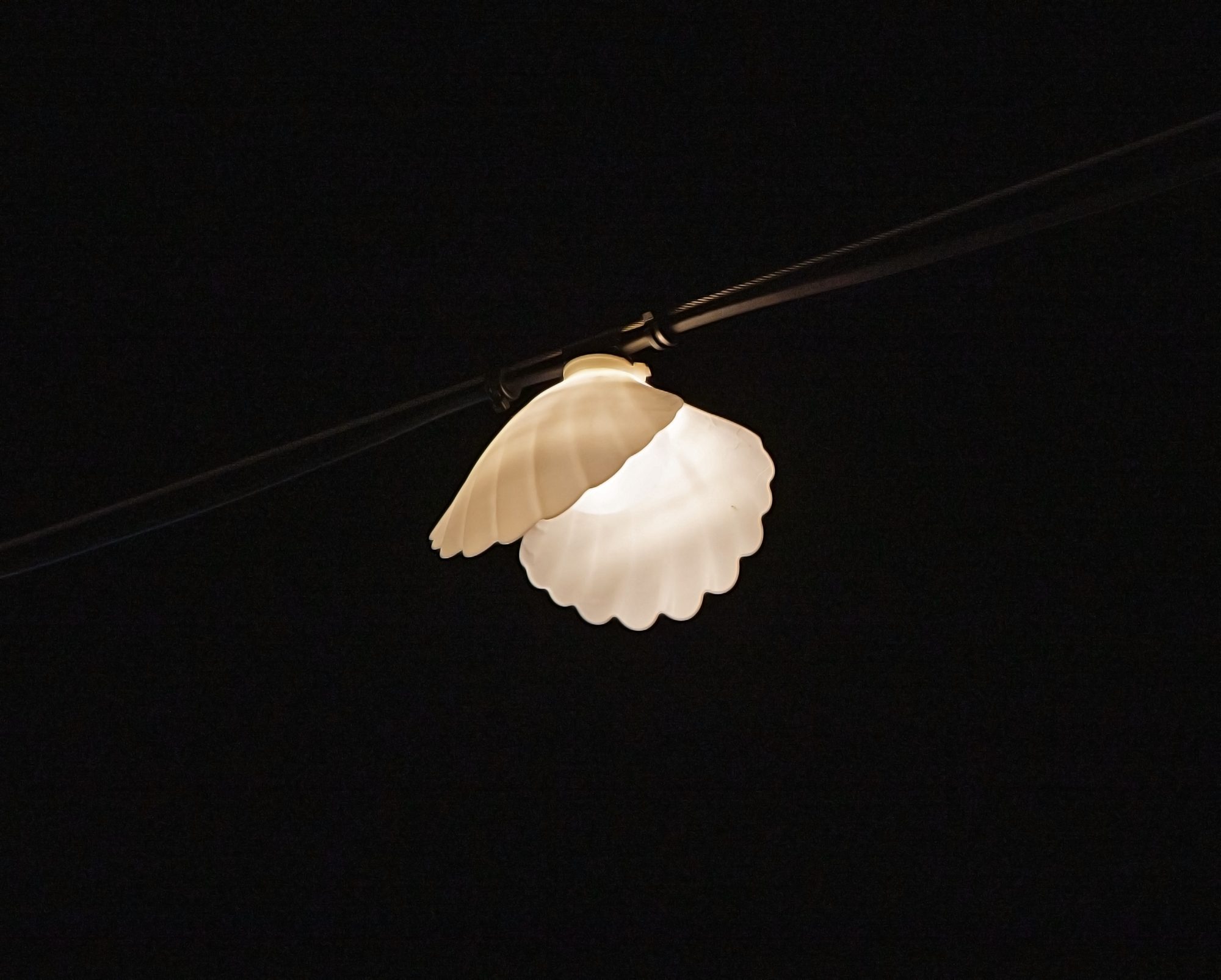
Somewhere along the run, one globe is not like the others.
At the client's request, MaxiLED engineered a one-off scalloped shell cover, a quiet tribute to the seaside, hidden along the mile for walkers to find. Bespoke engineering is not a slogan at MaxiLED. It is a production line that takes orders of one.
Southend Pier is a turnkey reference: MaxiLED Large Globe WW 2700 K at 24 VDC, MaxiBATCAP DarkSky shielding on every globe, bespoke run lengths and spacing made to measure for the project. Talk to a specialist about photometric data and your own scheme.